
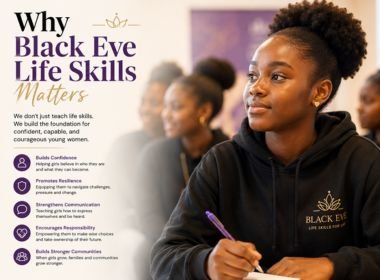
Girls of African heritage are not a problem to be solved. They are girls with dignity, intelligence, ability, promise, and a future. But the realities they face are not always the same as those faced by other girls, and life skills education should be honest about that.
In the Western World
Many Black girls grow up in societies where they may be judged before they speak. They can be stereotyped, misread as older than they are, treated as less innocent, disciplined more harshly, or expected to be strong without being properly protected.
The Child Q Safeguarding Review identified adultification bias as a serious concern in the treatment of a Black child, and UK research has documented the distinct racialised public sexual harassment experienced by Black and minoritised girls. Black girls can also face hair discrimination, appearance policing, unequal treatment in schools, and disproportionate exclusions. There is a constant, heavy pressure to fit into spaces where their identity is not always understood or affirmed.
In Africa and the Caribbean
The challenges may look different, but they are no less serious. Many girls grow up within contexts where gender inequality, harmful social norms, poverty, heavy domestic responsibilities, early pregnancy, child marriage, FGM, interrupted education, weak protection systems, and limited economic opportunity can reduce their freedom, safety, confidence, and future prospects.
UNICEF reports that 125 million African girls and women alive today were married as children, and its data estimates that over 230 million girls and women globally have undergone FGM, with Africa carrying the largest share. Meanwhile, in Latin America and the Caribbean, UNFPA reports that Afrodescendent girls are significantly more likely than their non-Afrodescendent peers to become pregnant in their teens.
This is why Black Eve Life Skills exists.
We do not teach life skills as abstract personal development. We teach them in context—in relation to the realities that shape the lives of Black African girls and young women: identity, dignity, conduct, family and cultural expectations, relationships, safety, education, opportunity, responsibility, and leadership.
- A girl does not simply need “confidence.” She may need to understand her worth when her appearance is judged, her voice is misread, her body is stereotyped, or her future is quietly limited.
- She does not simply need “decision-making.” She may need to make decisions in the middle of family expectations, peer pressure, gender norms, racism, school pressure, money worries, unsafe relationships, or limited opportunity.
- She does not simply need “communication.” She may need to learn how to speak with respect without disappearing, set boundaries without shame, ask for help without fear, and use her voice in spaces where she may not be expected to lead.
Black Eve exists to form girls and young women of African heritage for the realities they face and the future they are capable of shaping. Our work supports them to know who they are, carry themselves with dignity, build healthy relationships, make responsible choices, protect their future, and take their place in family, community, society, and leadership.