
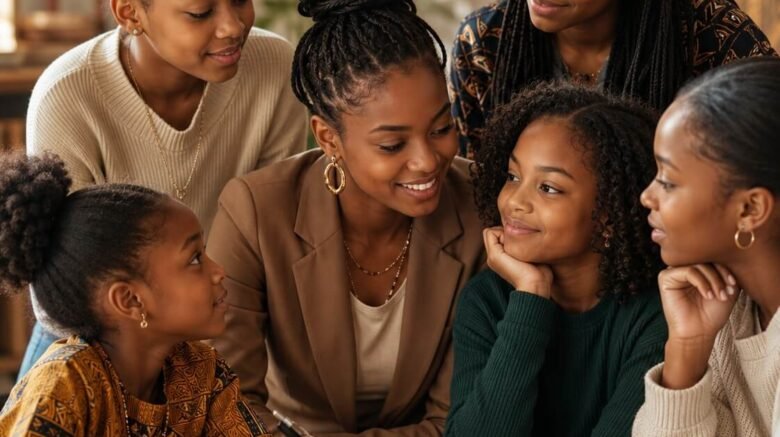
Girls do not grow up in a vacuum. Their confidence, choices, relationships, safety, self-worth and sense of possibility are shaped by family, culture, community, expectations, opportunity, and the way they are seen and treated.
That is why Black Eve Foundation teaches life skills in the context of girls’ real lives. We focus on girls and young women of African heritage and make room for the experiences and pressures that may shape how they see themselves, relate to others and approach their futures.
Our work connects life skills to four areas of everyday life:
Identity, dignity and self-worth
A girl needs space to understand who she is, recognise her abilities and know that her dignity does not depend on someone else’s approval. Self-awareness and healthy self-esteem help her make choices from a clearer understanding of herself.
Character, conduct and responsibility
How we respond to frustration, manage pressure and carry out our responsibilities affects both our own lives and the people around us. Girls learn to notice their reactions, consider their actions and take responsibility for the choices they make.
Relationships, safety and community
Life with other people calls for empathy, communication and judgement. Girls explore how to listen, express themselves, build healthy relationships, recognise when something is wrong and seek support.
Future readiness and wise choices
Growing up brings decisions about education, work, relationships and the kind of life a girl wants to build. Thinking critically and creatively, setting goals, making decisions and solving problems help her take an active part in shaping that future.
These areas are connected. A girl who understands herself may communicate more clearly. Someone who can manage pressure may find it easier to think through a difficult decision. Learning a skill matters most when she can recognise where it belongs in her own life and begin to use it there.
This is the Black Eve approach: teaching life skills intentionally, giving girls opportunities to reflect and apply them, and helping them grow in their capacity to live with themselves, live with others and contribute to society.